The Read Optional

The Read Optional

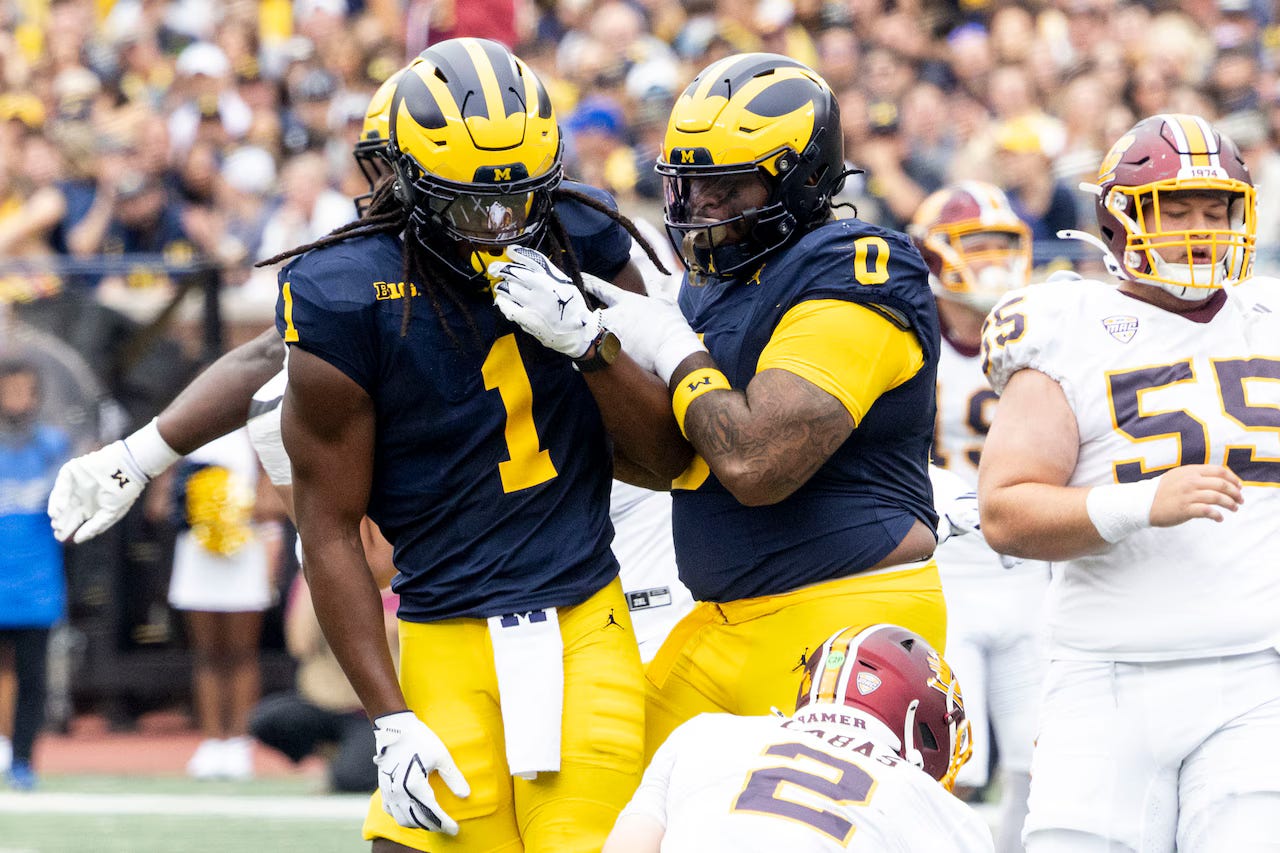
2026 NFL Draft Scouting Report: Jaishawn Barham, Edge, Michigan

Breaking down the strengths, weak points, usage, and projected role of Michigan Edge Jaishawn Barham. Plus: grades and schematic fit

Oliver Connolly's avatar
Oliver Connolly
Apr 06, 2026
∙ Paid

Updated: 04/06/2026

Note: This season, I’m posting full scouting reports of a ton of players — as well as written columns on some of the top or most intriguing prospects. This is the format I file to scouting services, and that mirrors the “one sheets” you see in NFL front offices — with some explanations about position critical traits for readers. The written-through columns will have deeper explanations on some of the scouting terms and, more importantly, why they matter. Those will come throughout the draft cycle. But I’ve had requests for these quick reports, and so here they are! I’ve updated my process this season, based on the Chargers model that stems from Michigan and is now used in Baltimore and Seattle. If you want to understand more about the changes and any verbiage, I broke the process down on the first scouting evaluations podcast with Jon Ledyard.


2026 NFL Draft Hub

Prospect: Jaishawn Barham | Jersey #: 1 | Pro Pos.: Edge/LB | College Pos.: Edge/LB

School: Michigan | Height: 6-3 | Weight: 240lbs | Speed: 4.64; 1.61

Explosive Index: 8.72 | Age: 22 | Final Grade: 7.44 (Quality Starter)

Draft Projection: Top-100

STRONG POINTS:

· A four-year starter who made the switch to full-time edge from off-ball linebacker in his senior year. Light for a full-time edge defender, but has big hands and a stout frame: bigger hands than Keldric Faulk and Zion Young.

· Good springs and functional athleticism — a swerve-y mover jutting from out to in. Can leap gaps. A legit speed-to-power threat who brings thunder at the point-of-attack.

· Competitive toughness off the charts. Elite play demeanor. Plays the edge position like a downhill, thumping linebacker.

· Still green as a rusher but shows potential as a three-way threat. Can sink under the pad level of tackles. Good feel and timing for when to drop his pads. Creates carnage at the point of contact. Erupts into blockers. For a lighter edge, he creates more thump on contact than almost all the bigger edges in this class.

· Wins with speed and power, claiming the corner then having the strength not to give it back.

· A sledgehammer in the run game. Can knockback linemen on impact and maul tight ends one-on-one. He has a solid enough anchor to sit and hold the point on the edge — big hands, heavy mitts. Has the knockback power in close quarters to set a heavy edge and funnel ball-carriers to his help. Whether playing in tight confides or dropped out into space, he’s always playing with physicality and playing to his help.

· Has rushed from multiple alignments — pre- and post-snap. Flashes real potential as a pop-and-drop player moving around the formation as a mugged up blitzer. He has lateral speed, which makes him a real threat to slice inside and get under the pad-level of guards — and he has the lower body strength to play through contact and finish off the half-man.

· Sits on his bull-rush, converting speed-to-power. He snaps heads on impact and then plays with frenetic feet and hands. Refuses to stay blocked and keeps walking linemen back onto the feet of quarterbacks.

· An excellent pass-rush radar when rushing from the edge for someone with limited reps. Rarely caught too deep in the backfield. Wants to attack out-to-in, breaking the inside shoulder or drilling tackles through the midline. Creates a natural 45-degree attack angle to press back to quarterbacks rather than dipping around the edge and flattening the arc.

· Good hat and hand placement in the run game. Plays with natural leverage. Rises up and through contact and sustains once he’s engaged. Has the in-line power to hold the point on the front side — and the springs to shoot gaps on the backside.

· A tone setter who wants to blast everyone in sight. Was built to play against pullers. Consistently displaced the front against USC and Ohio State. Barham sat, held his lane, and stoned anyone who came into his area.

· Has shown the athleticism to match up with tight ends down the field and backs out of the backfield in coverage, be it from the edge or lining up as a linebacker.

· A powerful stack, long arm, and get-off on the edge. He has a wide variety of take-on skills to defeat blocks in the run game: stack-and-extension, slipping blocks, and stack-and-climb.

· Rides contact at a ridiculous level. Got hit with a nasty snatch-trap against Washington, stumbled but never hit the deck, regained his feet and balance and continued his rush. That strength makes him a potent second-surge rusher, which yields the vast majority of sacks in the NFL. For a lighter edge, he can ride the initial contact, drop his level, keep his feet churning and press back the outside shoulder of tackles.

· Rock solid player at the point of attack. Hard to move off his spot. An A-Plus block destructor. Has every tool in his bag to defeat blocks. Can get caught on blocks once thicc linemen climb in his frame, but refuses to stay blocked throughout the rep.

· Quality range to the perimeter on the edge — flashes as a mugged A-Gap defender breaking outside the numbers.

· The definition of a ball disruptor. If you’re not a dominant one-on-one winner (meaning: one of the best pure edge-rushers in the league), ball disruption is the name of the game. That comes in many ways: quickening the tempo of the quarterback and forcing errant throws, flushing them off their spot, and batting down passes. Barham’s smarts, burst, tenacity and lateral quicks allow him to routinely break down the pocket quickly. He has an innate feel for the tempo of a concept and how he can disrupt it, whether that’s crossing face and leaping to muddy the window before he can get home or blasting a motion-man to eliminate a target for the QB before firing into the backfield.

· A lot of plus attributes without any individual A-plus. But the B’s and B+’s add up to a good player who will be valuable in the league.

· Good feel in the pressure game. Swerving movement makes him a natural to cut back in and draw the T-G double. Bombs people once he arrives, fights through flailing arms. Has an outstanding feel and timing for when to dive across face to pop the blitzer coming behind him. Michigan, under Wink Martindale, built a deeper, more varied pressure system as the season progressed, built around Barham.

· Well-tuned to the team’s overall pass-rush plan.

· Barham is just a Ball Player. He has a great feel for the game. He understands what is needed to win the rep and has the athletic and technical skills to make it happen. He creates constant disruption, even if he doesn’t finish the rep with the state. Barham has a strong feel for down, distance, formation, and situation. He is constantly sniffing out plays based on the alignment of the offense. He makes a ton of plays he has no business being a part of because he’s thinking two steps-ahead. With some players, it’s a no-it-when-you-see-it. They just feel the game; they’re natural football players. Barham has a Van Ginkel-like streak. That IQ allows him to play quicker than he tested.

WEAK POINTS:

Updated: 04/06/2026

Note: This season, I’m posting full scouting reports of a ton of players — as well as written columns on some of the top or most intriguing prospects. This is the format I file to scouting services, and that mirrors the “one sheets” you see in NFL front offices — with some explanations about position critical traits for readers. The written-through columns will have deeper explanations on some of the scouting terms and, more importantly, why they matter. Those will come throughout the draft cycle. But I’ve had requests for these quick reports, and so here they are! I’ve updated my process this season, based on the Chargers model that stems from Michigan and is now used in Baltimore and Seattle. If you want to understand more about the changes and any verbiage, I broke the process down on the first scouting evaluations podcast with Jon Ledyard.


2026 NFL Draft Hub

Prospect: Jaishawn Barham | Jersey #: 1 | Pro Pos.: Edge/LB | College Pos.: Edge/LB

School: Michigan | Height: 6-3 | Weight: 240lbs | Speed: 4.64; 1.61

Explosive Index: 8.72 | Age: 22 | Final Grade: 7.44 (Quality Starter)

Draft Projection: Top-100

STRONG POINTS:

· A four-year starter who made the switch to full-time edge from off-ball linebacker in his senior year. Light for a full-time edge defender, but has big hands and a stout frame: bigger hands than Keldric Faulk and Zion Young.

· Good springs and functional athleticism — a swerve-y mover jutting from out to in. Can leap gaps. A legit speed-to-power threat who brings thunder at the point-of-attack.

· Competitive toughness off the charts. Elite play demeanor. Plays the edge position like a downhill, thumping linebacker.

· Still green as a rusher but shows potential as a three-way threat. Can sink under the pad level of tackles. Good feel and timing for when to drop his pads. Creates carnage at the point of contact. Erupts into blockers. For a lighter edge, he creates more thump on contact than almost all the bigger edges in this class.

· Wins with speed and power, claiming the corner then having the strength not to give it back.

· A sledgehammer in the run game. Can knockback linemen on impact and maul tight ends one-on-one. He has a solid enough anchor to sit and hold the point on the edge — big hands, heavy mitts. Has the knockback power in close quarters to set a heavy edge and funnel ball-carriers to his help. Whether playing in tight confides or dropped out into space, he’s always playing with physicality and playing to his help.

· Has rushed from multiple alignments — pre- and post-snap. Flashes real potential as a pop-and-drop player moving around the formation as a mugged up blitzer. He has lateral speed, which makes him a real threat to slice inside and get under the pad-level of guards — and he has the lower body strength to play through contact and finish off the half-man.

· Sits on his bull-rush, converting speed-to-power. He snaps heads on impact and then plays with frenetic feet and hands. Refuses to stay blocked and keeps walking linemen back onto the feet of quarterbacks.

· An excellent pass-rush radar when rushing from the edge for someone with limited reps. Rarely caught too deep in the backfield. Wants to attack out-to-in, breaking the inside shoulder or drilling tackles through the midline. Creates a natural 45-degree attack angle to press back to quarterbacks rather than dipping around the edge and flattening the arc.

· Good hat and hand placement in the run game. Plays with natural leverage. Rises up and through contact and sustains once he’s engaged. Has the in-line power to hold the point on the front side — and the springs to shoot gaps on the backside.

· A tone setter who wants to blast everyone in sight. Was built to play against pullers. Consistently displaced the front against USC and Ohio State. Barham sat, held his lane, and stoned anyone who came into his area.

· Has shown the athleticism to match up with tight ends down the field and backs out of the backfield in coverage, be it from the edge or lining up as a linebacker.

· A powerful stack, long arm, and get-off on the edge. He has a wide variety of take-on skills to defeat blocks in the run game: stack-and-extension, slipping blocks, and stack-and-climb.

· Rides contact at a ridiculous level. Got hit with a nasty snatch-trap against Washington, stumbled but never hit the deck, regained his feet and balance and continued his rush. That strength makes him a potent second-surge rusher, which yields the vast majority of sacks in the NFL. For a lighter edge, he can ride the initial contact, drop his level, keep his feet churning and press back the outside shoulder of tackles.

· Rock solid player at the point of attack. Hard to move off his spot. An A-Plus block destructor. Has every tool in his bag to defeat blocks. Can get caught on blocks once thicc linemen climb in his frame, but refuses to stay blocked throughout the rep.

· Quality range to the perimeter on the edge — flashes as a mugged A-Gap defender breaking outside the numbers.

· The definition of a ball disruptor. If you’re not a dominant one-on-one winner (meaning: one of the best pure edge-rushers in the league), ball disruption is the name of the game. That comes in many ways: quickening the tempo of the quarterback and forcing errant throws, flushing them off their spot, and batting down passes. Barham’s smarts, burst, tenacity and lateral quicks allow him to routinely break down the pocket quickly. He has an innate feel for the tempo of a concept and how he can disrupt it, whether that’s crossing face and leaping to muddy the window before he can get home or blasting a motion-man to eliminate a target for the QB before firing into the backfield.

· A lot of plus attributes without any individual A-plus. But the B’s and B+’s add up to a good player who will be valuable in the league.

· Good feel in the pressure game. Swerving movement makes him a natural to cut back in and draw the T-G double. Bombs people once he arrives, fights through flailing arms. Has an outstanding feel and timing for when to dive across face to pop the blitzer coming behind him. Michigan, under Wink Martindale, built a deeper, more varied pressure system as the season progressed, built around Barham.

· Well-tuned to the team’s overall pass-rush plan.

· Barham is just a Ball Player. He has a great feel for the game. He understands what is needed to win the rep and has the athletic and technical skills to make it happen. He creates constant disruption, even if he doesn’t finish the rep with the state. Barham has a strong feel for down, distance, formation, and situation. He is constantly sniffing out plays based on the alignment of the offense. He makes a ton of plays he has no business being a part of because he’s thinking two steps-ahead. With some players, it’s a no-it-when-you-see-it. They just feel the game; they’re natural football players. Barham has a Van Ginkel-like streak. That IQ allows him to play quicker than he tested.

WEAK POINTS:

· Unrefined with his hands. Too often confuses blurry, fast hands with using his hands for a purpose.

· Struggles to accelerate off contact. Will get caught on the naval of blockers. When he wins clean, he ricochets off tackles and explodes through contact into quarterbacks or ball-carriers. But too often, he is forced to reset and gather after clearing the blocker.

· A little confused pre-snap when down on the edge. Not always sure which should be the lead foot. Will shuffle right up to the point of the snap.

· His linebacker instincts show up as an edge player. His perception of the depth of the backfield is a little off in the run game. He is prone to climbing too deep into the backfield and overplaying things.

· He is also prone to freelancing from the edge. Is antsy to make plays on the ball and can corrupt the run fit.

· Still figuring out his mechanics as an upfield rusher and early-down edge. He is consistently chopping and changing his feet pre-snap and as the snap is in motion. You can see him trying to unprogram his linebacker coaching points and switching in real-time to being an edge defender.

· Can drop his eyes and lose where he is. Leads to fun plays where he just drops his helmet in someone’s chest and keeps churning and plugging away to keep someone moving. But it’s not well-refined pro football.

SUMMARY / ROLE PROJECTION:

· Barham is a first-team “My Guy” in this class. At Michigan, he played in a Joker role, moving around the formation as an edge defender and an interior, mugged-up rusher. He plays with exceptional play speed, violence, technique and tenacity in every alignment. Some teams will view him as a linebacker, due to his sheer lack of mass and his experience in that role. As an off-ball player, he works best in a trigger-and-close role, sitting off the ball and playing run-and-chase football. He has a solid coverage antenna and gets to everywhere in a hurry. But he lacks some of the feel needed in the box. When directed as a point-and-shoot blitzer, he brings the same lethal tenacity and thump to the point-of-attack as he does when playing on the edge. But he lacks some of the diagnose-and-attack feel to work through the crevices in the front. He wants to play A-to-C, plastering a blocker in the face as quickly as possible; there are few examples of him dancing through a fractured front — the down-to-down lifeblood of a stacked linebacker. In a more patient sift-and-find role, he could struggle. He can be late to decode blocking mechanics and bets on his burst and effort to make up for the delay. In a stacked alignment, he is a risk-taker who too often corrupted the run fit on his own. My comp for Barham is Jamie Collins: the linebacker/edge-defender whose role would shift on a gameplan-to-gameplan basis. Barham is a more instinctive, natural pass-rusher on the edge. He has a potent dip-and-rip move and the speed to knife back to the inside shoulder of tackles. As a mugged-up blitzer, he has the juice and flexibility to threaten guards off the snap. He must, at all times, be accounted for. He’s also incredibly explosive, springing out from mugged up spots into coverage. He’s built for the modern game, playing in a malleable role for versatile defenses that major in wonky pressure packages. He can hold the point early in the down and distance and then shuffle around the formation on passing downs, hunting matchups, and helping to elevate a team’s blitz package. Simply put: he puts more on the menu for DCs — and he does so with fanatical effort and quality technique. There is more development needed as a pure edge-rusher, but there are enough tools in his bag to survive and create an impact if he’s pushed into that exclusive role early on. Doing so, however, would limit his potential. Like Collins, he can slide around the formation and be a linchpin piece who can raise the impact of pressure packages and offer violent, assignment-sound ball on run-downs. And like Collins, he can be too eager to make a play and enter freelance mode. Collins had more mass coming out of college, but Barham is more technically proficient at this stage in his development. He won’t be the best player on his team at any single skill, but he can be a fulcrum of a defensive front that allows everyone else to feast.

· Barham is built for any defense. Right now, he makes most sense for an attack-based group that uses multiple mugged defenders on passing downs, be they blitz-heavy or sim-pressure teams (Minnesota, Atlanta). But with his versatility, he can survive in more static defense while putting more exotic things on the menu for a DC who wants to shift to having a more diverse pressure group. Barham will make someone delighted on Day Two of the Draft.

· Barham: 6-3, 240lbs, 32 3/8 arms, 10 3/8 hands. 1.61 10-yard, 4.64.

· Collins: 6-3, 250lbs, 33 ¾” arms, 9 ¾ hands, 1.56 10-yard, 4.64 40-yard.

ADDITIONAL COMMENTS:

· Next Gen Stats gave him an athletic red flag. A slow 40-time for his weight, but he posted a good 10-yard split. Hit 21.5 MPH — 10th among those who tested. That was a tick behind Romello Height and ahead of TJ Parker and Dennis-Sutton.

· He ruined Nebraska’s afternoon. And he wasn’t on the field for every play. There is almost no snap where he didn’t make a play. It was one of the 10 best individual performances in this class.

· Was flagged against Ohio State for head-butting an official.

Position Critical Traits (1–9):

Get Off: 7.0

Rush Plan: 6.0

Power: 7.0

Counter Ability: 6.0

Block Destruction: 8.0

Run Fit Integrity: 6.0

Motor: 8.0

Finish: 7.0

Technique / Process:

Strike Timing: 7.0

Leverage Control: 6.0

Hand Usage: 6.0

Half-Man Relationship: 7.0

Block ID: 6.0

Alignment Flexibility: 9.0

Risk Factors:

TBD

Grading Scale: 9.0 Elite | 8.0 Impact Starter | 7.0 Quality Starter | 6.0 Solid Starter/Rotation | 5.0 Backup/Developmental | 4.0 Camp Level

© 2026 Oliver Connolly · Privacy ∙ Terms ∙ Collection notice
Start your SubstackGet the app
Substack is the home for great culture