

Updated: 04/11/2026
Note: This season, I’m posting full scouting reports of a ton of players — as well as written columns on some of the top or most intriguing prospects. This is the format I file to scouting services, and that mirrors the “one sheets” you see in NFL front offices — with some explanations about position critical traits for readers. The written-through columns will have deeper explanations on some of the scouting terms and, more importantly, why they matter. Those will come throughout the draft cycle. But I’ve had requests for these quick reports, and so here they are! I’ve updated my process this season, based on the Chargers model that stems from Michigan and is now used in Baltimore and Seattle. If you want to understand more about the changes and any verbiage, I broke the process down on the first scouting evaluations podcast with Jon Ledyard.
2026 NFL Draft Hub
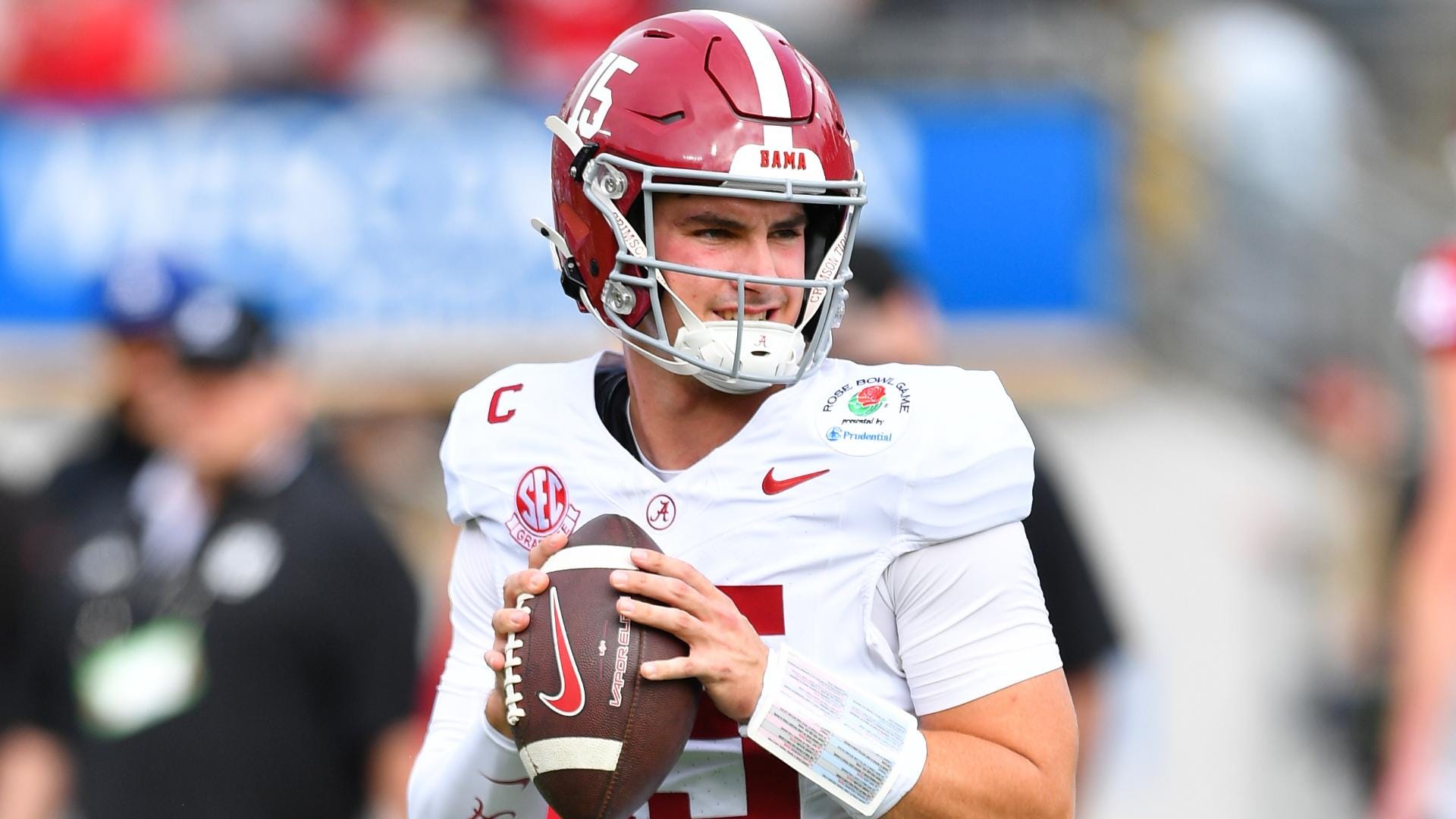
Prospect: Ty Simpson | Jersey #: 15 | Pro Pos.: QB | College Pos.: QB
School: Alabama | Height: 6-0 | Weight: 211lbs | Speed: N/A | Explosive Index: N/A
Age: 24 | Final Grade: 6.64 (Solid Starter) | Draft Projection: First Round
STRONG POINTS:
· A one-year starter in an ultra-aggressive downfield passing offense, with plenty of modern pro elements. Played under former Seahawks coordinator Ryan Grubb: the foundation of Grubb’s system is what you see on Sundays (spent only one season in the NFL). In that offense, Simpson processed professional passing concepts, playing to NFL rhtyhm. Was responsible for setting and resetting protections. Operated in a huddle as well as the no-huddle. For certain drives, he was given full audible command. The translation to the league, from a mental standpoint, should be simple.
· An ambitious pocket passer who will push the ball to all levels of the field. Even with his slight frame, he’s tough: takes big shots in the pocket; willing to put it on the line as a runner to pick up first downs; turns down open underneath throws to hunt plays down the field. Plays on time and in-rhythm, working back to anticipation throws over the middle of the field.
· A smart pre-snap operator. Was given full command to set and reset protections and to sight adjust — though didn’t have full audible command throughout games. Understands protection mechanics and where he is hot.
· Quick to process. Works slickly through one-two-three, on pro-style concepts. Shows he can control and move defenders with his eyes: holding safeties or widening corners. Gets to his checkdowns and finds answers based on the coverage. A lot of anticipation throws to the intermediate level and the middle of the field. Plays with NFL eyes: marrying his eyes and feet to the rhythm of the concept to work backside.
· A quality thrower on the move. Throws with more consistent accuracy on bootlegs and rollouts than when processing in the pocket. Has enough athleticism to stretch the edge on boot, though it isn’t a serious concern. Is athletic enough to pick up yards as a scrambler. Has enough wheels to be a threat as a designed run threat in the redzone.
· Shows real command on play-action. Excellent throwing on the move to his left or right. More consistently accurate on the move than in a muddy pocket. Shows high-level ball handling and disguise on turn-the-back play-action.
· Solid arm. Can make every throw even if they don’t wow you.
· Eyes and feet are in sync, though things unraveled during the final stretch of the season. Shows eye manipulation against linebackers and safeties.
· Happy to stand in and deliver with pressure in his face. Has made tough throws — NFL throws — while taking big shots from free runners in his face. Quick to reset and throw.
· A tight, compact release. A smooth, repeatable action; quick reset to delivery, though he is a reloader. Throws from a good, natural base. Clean mechanically when not pressured and maintains his base when pressured — again, it dipped towards the end of the season.
· Good touch layering the ball to the second level. Can rip it to the second level or drop in bucket throws. Isn’t afraid of congestion in the MOF. Throws with rhythm and timing to all areas of the field.
· Has worked from the gun, pistol, and under center. Is adept at turning to the defense, resetting, and finding answers. His best work comes on NFL staples: play-action crossers, boot-actions, etc. Had difficulty during the second half of the season as DCs gathered more tape and changed the picture on him pre- to post-snap, but the early-season work speaks to a quarterback who understands how to manipulate and respond to morphing coverages.
· Willing to push the ball vertically. Doesn’t live in quick game or survive on manufactured production. Will turn to easy-outs on turn-the-back play-action chase to chase knockout shots down the field.
· High-level recognition and communication all over the film — the execution is what is up and down.
· Early in the season, everything he did was FAST: Decision-making, pocket twitch, etc. Later in the season, he was nowhere near as slick – rhythm slowed down; footwork in the pocket; agility to avoid the rush. Why did that drop off? Health? The offensive structure? The talent surrounding him? Defensive coordinators adjusting? All the above?
WEAK POINTS:
· Lacks size. Light frame. Small hands. Small arms. Durability is a concern. Took a lot of violent shots in college. Was routinely folded up. Lack of body armor showed up over the course of the season; he took a beating, and his play steeply declined. There are times when it’s clear he’s struggling to see over the line of scrimmage. Can he withstand the punishment of a 17-game-plus schedule?
· From Ted Nguyen: “In the last 20 years, there have been only six quarterbacks who were 6-foot-1 or shorter and less than 215 pounds who have started more than 40 games in the NFL: Drew Brees, Russell Wilson, Baker Mayfield, Michael Vick, Kyler Murray and Bryce Young.” Wilson and Mayfield were sturdier players than Simpson. Murray and Vick were special athletes. Brees was a better athlete and had a supercomputer for a brain. Simpson is more in the Young camp. Does he have a super-skill to overcome his size and durability concerns? Young’s super-skills were pocket mobility and his intellect. Simpson plays a similar style, but without the consistency of Young in college, and Young was just a more explosive mover within the pocket.
· Only 15 starts in college. As defensive coordinators got more tape and adapted, he got worse.
· Strong pre-snap ID. Struggles when defenses change the picture pre- to post-snap.
· A solid arm. Can make all the necessary throws. But he isn’t a consistent “wow” thrower.
· Lack of natural arm talent shows up on deep out-breaking routes. Doesn’t have a ton of zip on the ball. It can hang rather than being drilled with a tight spiral. He has to load up and straighten to his target — elongating the load-to-arrival time. Will often lose accuracy as he strains to add extra velocity. Too many off-target throws when pushing the ball past 10 yards. The ball will sometimes die on him on throws to the perimeter.
· Ball placement is up and down. He is often accurate, but rarely precise: throwing to landmarks; throwing to leverage; throwing players open; giving receivers a chance to create after the catch. It’s a small list of quarterbacks who have shifted from being accurate to precise in the pros.
· Has some gaping misses. Will miss his target by yards, even from a clean pocket. Consistently overshoots downfield throws. There is accuracy, but often a lack of precision. Accuracy dropped dramatically in the second half of the season when he was consistently sped up in the pocket. Abandoned his base and mechanics — and doesn’t have the natural arm talent to make up for it.
· Isn’t a threat as a creator. Can move well enough to pick up first downs and has a great feel on bootlegs and rollouts, but he isn’t a dynamic player with the ball in his hands.
· Struggles to navigate a cluttered pocket. The inexperience shows up. Isn’t a natural stick-slide-climb thrower. Panics and bails or sticks to his spot and rhythm and throws from a muddy pocket, often off-target. His instinct is to move back and out of the pocket rather than climb up and through, even when there is an escape valve.